SEO success on e-commerce sites shouldn’t only be measured by how much traffic you gain. Real success is when organic visibility converts into sales, revenue, and sustainable growth.
In this study, the goal wasn’t simply to become more visible in search engines. The aim was to build category and product pages that better answer users’ purchase intent, improve site performance, strengthen the user experience, and turn the organic channel into a stronger revenue source.
By the end of a 6-month period of SEO, UX, and performance optimization, the organic channel had become one of the brand’s strongest growth areas.
Key Results
Periods compared: Last 6 months: December 8, 2025 – June 8, 2026 Previous 6 months: June 9, 2025 – December 7, 2025
According to Google Search Console data, organic visibility saw strong growth over the last 6 months:
| Metric | Previous 6 Months | Last 6 Months | Change |
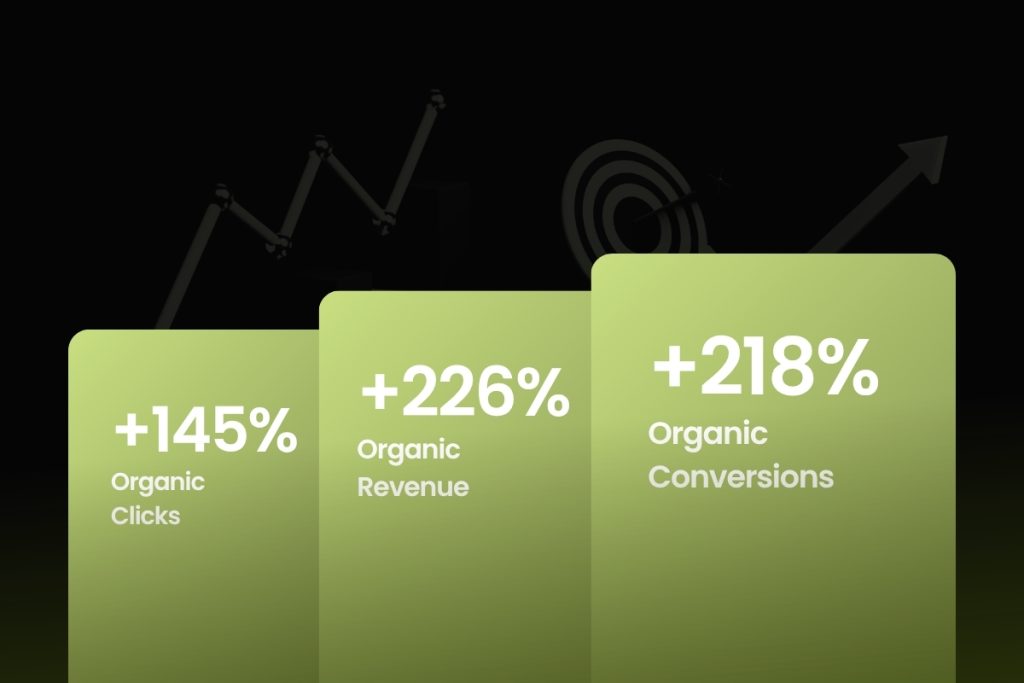
| Total Clicks | 11.6K | 28.4K | +145% |
| Total Impressions | 130K | 209K | +61% |
| Average CTR | 8.9% | 13.6% | +53% |
| Average Position | 5.4 | 5.3 | Slight improvement |
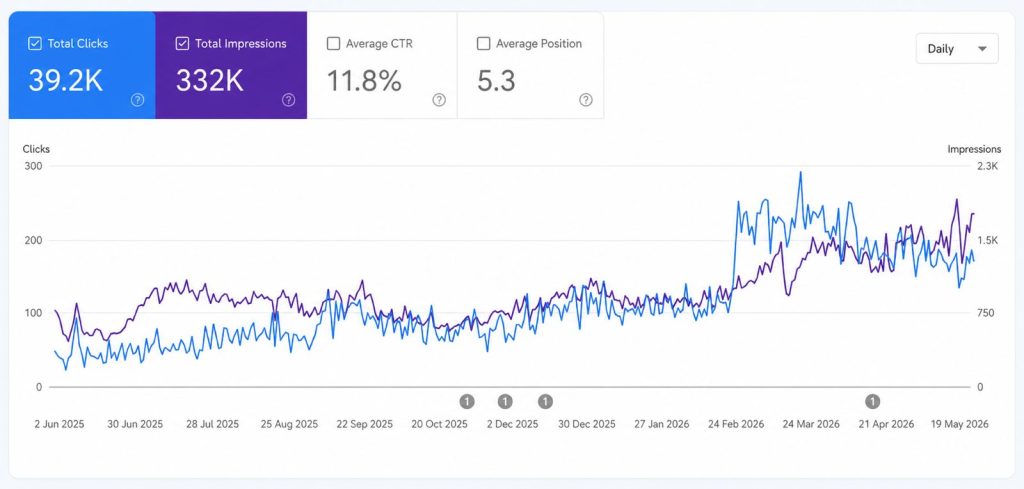
This table shows that the site didn’t just become visible in more searches, it also became more preferred within search results. The strong increase in click-through rate shows that page titles, descriptions, search intent alignment, and brand trust were all working together.
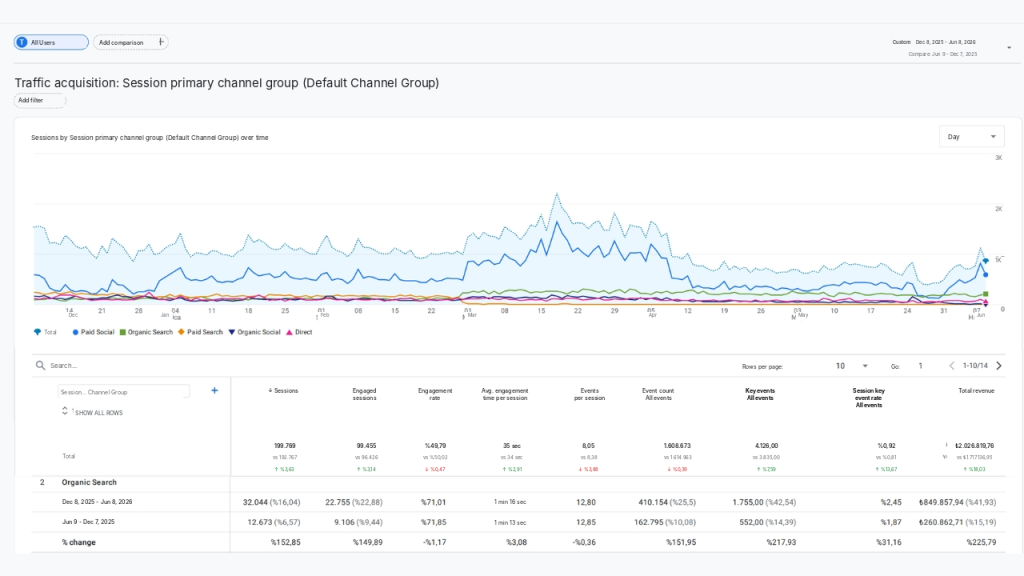
GA4 data shows that the organic search channel became not just a traffic source, but a direct revenue-generating growth channel:
| Metric | Previous 6 Months | Last 6 Months | Change |
| Organic Search Sessions | 12,673 | 32,044 | +152.85% |
| Engaged Sessions | 9,106 | 22,755 | +149.89% |
| Key Events | 552 | 1,755 | +217.93% |
| Organic Search Revenue | ₺260,862.71 | ₺849,857.94 | +225.79% |
| Session Key Event Rate | 1.87% | 2.45% | +31.16% |
Organic search revenue made up 15.19% of total revenue in the previous period; in the last 6 months this share rose to 41.93%. In other words, the organic channel didn’t just grow, it significantly increased its weight within total revenue.
Starting Point: Organic Traffic With Potential That Wasn’t Fully Utilized
At the start of the project, the site had a strong product range, high commercial potential, and clear user demand. However, category pages, product groups, and model-based collection pages weren’t making full use of their organic search potential.
There was significant untapped opportunity, particularly around phone-model-specific searches, product series, case categories, and high-intent purchase queries.
For this reason, the SEO strategy wasn’t built solely around blog content or basic meta optimizations. Strengthening category pages, improving the technical infrastructure, enhancing the user experience, and increasing page performance were placed at the center of the work.
The SEO, UX, and Performance Strategy Applied
In this project, SEO work wasn’t aimed at search engines alone. Helping users reach products faster once they landed on the site, move through pages more comfortably, and approach a purchase decision more easily were also core parts of the strategy.
First, the areas directly affecting user experience were optimized. UX improvements were made to the homepage, product pages, header areas, and category pages. The goal was for users to discover products more easily, reach key categories faster, and move through the purchase journey with less friction.
On the performance side, banner areas, theme structure, and app usage were optimized. On e-commerce sites, heavy theme structures, unoptimized banner images, and excessive app usage can directly affect page speed. Banner optimization, theme optimization, and app optimization work made the site faster and more efficient.
Category pages were reworked from an SEO perspective. SEO-focused text sections were added to category pages targeting high-intent users. These texts weren’t written just for keyword usage, they were designed to give users context about the product group and help search engines better understand the page content.
Filter and category structures were also improved, making it easier for users to discover products by model, series, product type, or need. This strengthened the user experience while also making the category architecture clearer.
On the analysis side, Google Search Console and Microsoft Clarity were actively used. Search Console tracked organic visibility, query performance, click-through rate, and page-level progress. Clarity was used to analyze user behavior and identify areas where the on-page experience could be improved.
Finally, all schema settings were configured. Structured data was set up for product, category, and related page types to help search engines better understand the site. This strengthened not just classic ranking performance, but the quality of visibility within search results.
Strong Growth on Category and Landing Pages
One of the clearest areas where SEO success showed up was on category and collection pages.
For example, one important model-based collection page went from 645 sessions in the previous 6 months to 1,955 sessions in the last 6 months, a 203.10% increase in sessions. Revenue from that same page rose from ₺14,485.10 to ₺49,373.32, a 240.86% increase.
The homepage also saw strong growth. Sessions from the homepage rose from 4,800 to 12,393, while revenue rose from ₺125,393.78 to ₺405,463.34, a 223.35% increase in homepage revenue.
Overall landing page performance was just as strong. Sessions rose from 12,445 to 31,845, while total revenue rose from ₺252,688.15 to ₺843,549.94, a 233.83% increase in revenue.
These results clearly show how critical category and landing pages are in e-commerce SEO. High-intent users often search directly for products or categories, so when these pages are structured correctly, SEO turns into a channel that drives direct sales, not just traffic.
Organic Channel Balanced Out Fluctuations in Paid Channels
One of the most notable aspects of this work was how the organic channel strengthened its role within the overall channel mix.
During the same period, Paid Search revenue dropped from ₺609,033.52 to ₺352,613.00, a 42.1% decrease. Despite this, total revenue rose from ₺1,717,136.95 to ₺2,026,819.76, an overall growth of 18.03%.
This data makes one thing very clear: when SEO is built correctly, it isn’t just a supporting traffic channel. During periods when ad costs rise, campaign performance fluctuates, or paid search revenue drops, the organic channel provides the brand with a more resilient and sustainable area of growth.
In this project too, SEO became a strategic channel that balanced out dependence on paid channels, supported revenue growth, and lifted overall performance.
Quality Growth in Search Visibility
Google Search Console data shows improvement not just in clicks and impressions, but in click-through rate as well.
Over the last 6 months, total impressions rose from 130K to 209K, while total clicks rose from 11.6K to 28.4K. Average click-through rate rose from 8.9% to 13.6%.
This increase shows that organic growth wasn’t just about more pages becoming visible. Users started choosing the brand more often within search results, a sign that title optimization, page content, category structure, product matching, and brand trust were all working together.
Even though average position only showed a modest improvement, from 5.4 to 5.3, the significant rise in click-through rate is an important signal. It shows that getting more value out of existing rankings can be just as critical to SEO success as winning new rankings.
SEO Positioned as a Revenue Channel, Not Just a Traffic Channel
By the end of the 6-month project, the organic channel had:
Gained more visibility. Earned more clicks. Reached a higher click-through rate. Achieved strong growth on category and collection pages. Increased key events and sales revenue. Significantly raised its share of total revenue.
Most importantly, SEO became a strategic growth channel during this period, one that helped balance the brand’s dependence on paid advertising.
This success shows that sustainable growth in e-commerce SEO isn’t just about producing content. When technical SEO, UX improvements, category optimization, theme and app performance, schema settings, filter structure, analytics tools, and revenue-focused performance tracking are handled together, SEO can become a powerful channel that directly impacts revenue.
Quick Summary
As a result of this SEO, UX, and performance optimization work, over 6 months:
- Organic Search sessions increased by 152.85%.
- Organic Search revenue increased by 225.79%.
- Key events increased by 217.93%.
- Total organic clicks increased by 145%.
- Average click-through rate rose from 8.9% to 13.6%.
- The organic channel’s share of total revenue rose from 15.19% to 41.93%.
This data shows one thing clearly: the right SEO strategy doesn’t just bring visibility for e-commerce brands, it delivers measurable, sustainable, and revenue-driven growth.
How Much Growth Potential Does Your E-Commerce Site Have?
With the right strategy, organic search can become your brand’s most profitable channel. Take the first step so you don’t fall behind your competitors and to discover your site’s true potential. Let’s review your e-commerce site for free and map out a growth roadmap tailored to you.


